
CPW Confirms Severe Gill Lice Infestation in Lower Blue River Linked to Private Stocking
 January 12, 2026
  0 Comments
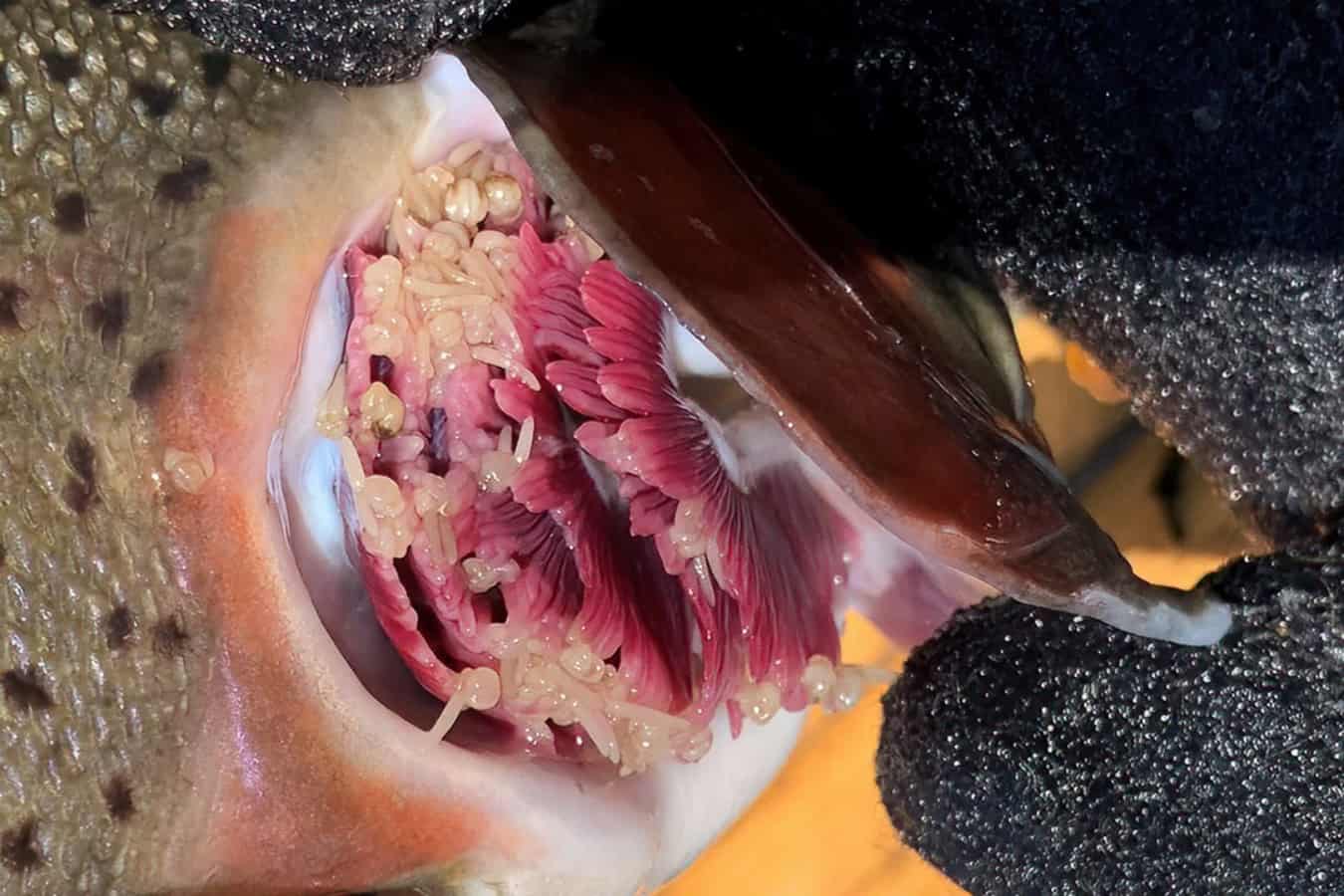
Photo courtesy of Colorado Parks and Wildlife
A bombshell report released on January 5, 2026, by Fly Fisherman magazine, detailing new survey data from Colorado Parks and Wildlife (CPW), has sent shockwaves through the angling community. The study focuses on the Lower Blue River near Kremmling, a designated Gold Medal water, and paints a grim picture of a fishery in imbalance.
According to aquatic biologist Jon Ewert, the biological makeup of the river has shifted dramatically in less than a decade. In the fall of 2018, wild brown trout comprised a staggering 98% of the river’s trout biomass. However, recent spring surveys reveal a sharp decline in brown trout numbers, coinciding with a sudden surge in rainbow trout populations.
These are not wild rainbows. The survey found that a significant portion of these fish carried PIT tags originating from private landowners upstream, specifically pointing to practices around the Blue Valley Ranch. These stocked rainbows were found to be “heavily infected” with Salmincola californiensis, a parasitic copepod known as gill lice.
The report draws a direct line between the infestation and the controversial management practices at Blue Valley Ranch. Often dubbed ‘Jurassic Park’ for its gargantuan, pellet-fed trout, the ranch’s operations are now being scrutinized as the primary vector for the outbreak.
CPW’s data indicates that artificial pellet feeding has led to severe overcrowding. This unnatural density of fish creates a perfect breeding ground for gill lice. The parasite attaches to a fish’s gills, inhibiting its ability to respire—essentially slowly suffocating it. While a few lice might be manageable, the heavy infestations observed are lethal, particularly when fish are stressed by low winter flows or warmer water temperatures.
This isn’t just a problem for private water; it’s a public resource crisis. The infected fish do not stay behind fences. They move downstream, potentially spreading the parasite into the Colorado River, risking a much larger ecological disaster.
For years, private stakeholders have deflected blame for the fishery’s decline onto public angler traffic. However, this biological evidence flips the script. “The apparent association between fed fish and heavy gill lice infestation,” the CPW report warns, is now the clear and present danger.
For fly fishers, this report signals likely regulatory battles ahead. The fragility of the Blue River during winter—when flows are low and trout are already lethargic—is now compounded by respiratory stress from the parasites. Anglers should be hyper-aware of proper handling practices to reduce stress on these fish, but the solution ultimately lies in policy reform regarding private stocking and feeding.
As the state weighs its options, the “Gold Medal” status of the Blue River hangs in the balance, proving that even the most engineered fisheries are not immune to the laws of nature.