
New Law Will Put Federal Waterway Rules on Your Phone
 February 23, 2026
  0 Comments
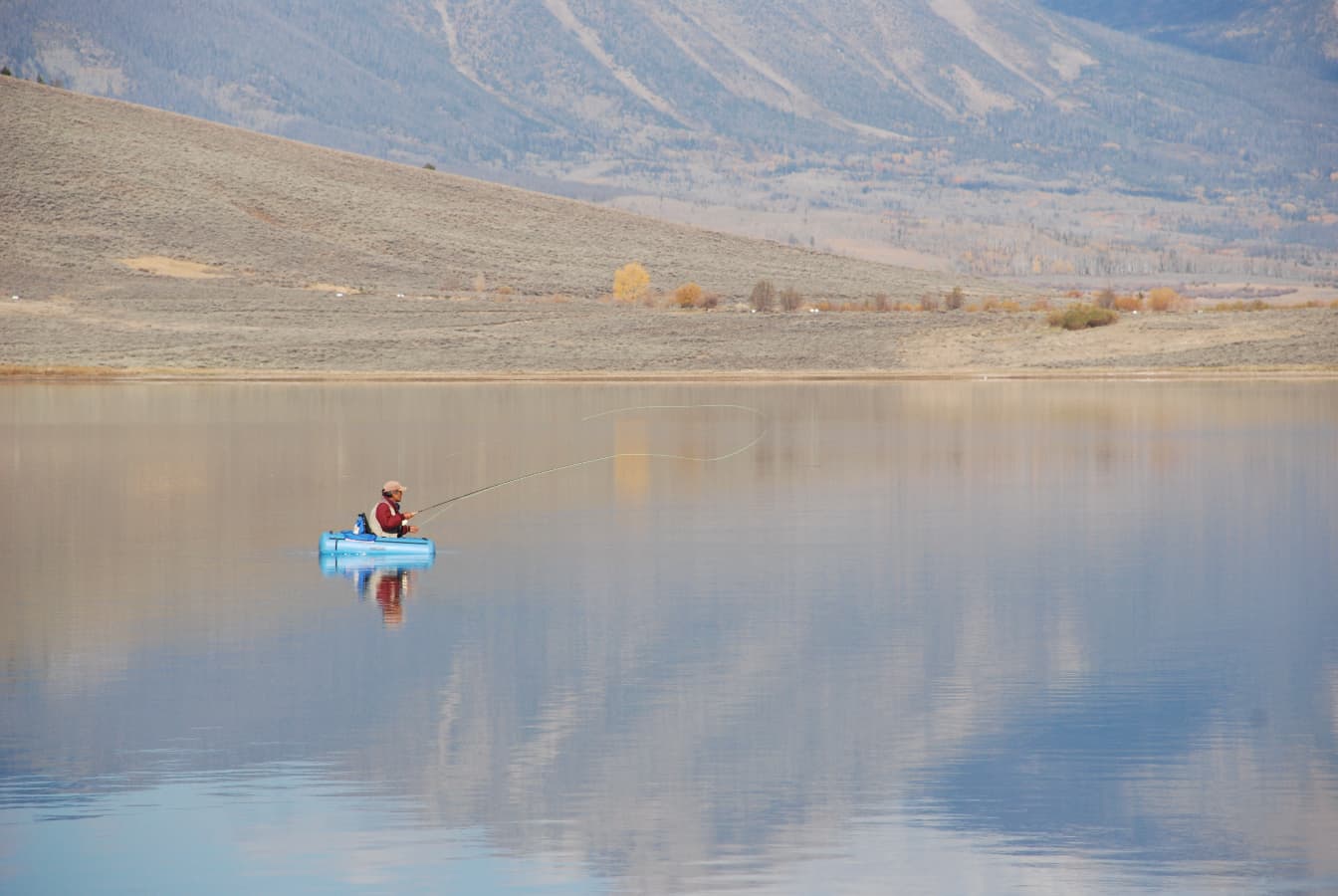
The MAPWaters Act, signed in late December, gives agencies five years to digitize access points, fishing restrictions, and boating regulations on all federally managed waters.
The Modernizing Access to Our Public Waters Act is now law. The Senate passed the bill unanimously on December 16, 2025, and President Trump signed it on December 26 as Public Law 119–62.
The law requires the U.S. Forest Service and the Department of the Interior—covering the National Park Service, Bureau of Land Management, U.S. Fish and Wildlife Service, and Bureau of Reclamation—to digitize and publish online all data related to recreational access on federal waterways. That means access points, boat ramps, fishing piers, watercraft restrictions (motorized versus non-motorized, horsepower limits), wake zones, catch-and-release requirements, barbless-hook mandates, and seasonal closures. The data must be published in GIS-compatible formats designed to feed directly into GPS apps and mapping platforms like onX.
Agencies have 30 months to develop joint data standards and five years to complete full digitization and publication.
Why It Matters for Anglers
Anyone who has pulled up to a federal reservoir or a Wild and Scenic river segment and tried to figure out the rules knows the problem. Seven federal agencies under four cabinet-level secretaries hold some jurisdiction over navigable waters. Regulations live on scattered agency websites, in paper kiosks at boat ramps, or nowhere at all. The Congressional Sportsmen’s Foundation has long cited access confusion as the single biggest barrier to angler participation.
The MAPWaters Act addresses that by requiring a centralized, standardized digital dataset—a single layer of regulatory information an angler can pull up on a phone the way hunters already check boundary maps on public land.
The MAP Suite
The law is the second in a family of bipartisan mapping bills. The MAPLand Act, signed in 2022, directed agencies to digitize public-land access information, including easements and rights-of-way across private land. That work is underway, with a 2027 compliance deadline.
With MAPWaters enacted, conservation groups are now pushing two companion measures. The MAPOceans Act, led by Senators Ted Cruz (R-Texas) and Angus King (I-Maine), would extend similar requirements to NOAA for saltwater fisheries, marine restricted areas, and ocean navigation data. The Senate passed MAPOceans in late 2025; it awaits House action. The MAPRoads Act would create a grant program to map rural public roads—a persistent headache in the rural West where road status is often unclear.
The Implementation Clock
Signing the bill was the easy part. The Department of the Interior flagged implementation concerns during the legislative process, citing lessons learned from the MAPLand rollout. The department noted that the original four-year timeline was ambitious—Congress ultimately extended it to five—and that the scope of data involved, from ambulatory waterway boundaries to seasonal fluctuations in water levels, is enormous.
The law also leaves some gaps. It covers only federal waters. State and Tribal fishing regulations, which most anglers encounter far more often, are not included. And agencies like the Army Corps of Engineers, NOAA, and the Coast Guard—all of which manage significant waterways—fall outside the bill’s mandate unless future legislation pulls them in.
The law requires annual progress reports to Congress through March 2034.
Who Made It Happen
The MAPWaters Act was led in the House by Rep. Blake Moore (R-Utah) with Reps. Jimmy Panetta (D-California), Russ Fulcher (R-Idaho), and Debbie Dingell (D-Michigan). In the Senate, Senators John Barrasso (R-Wyoming) and Angus King (I-Maine) carried the bill. Senators Mike Lee (R-Utah) and Martin Heinrich (D-New Mexico) helped push it across the finish line in the final days of the session.
The bill drew support from across the outdoor industry: the Theodore Roosevelt Conservation Partnership, Trout Unlimited, the American Sportfishing Association, the Congressional Sportsmen’s Foundation, onX, and TroutRoutes.
For anglers, the practical payoff is still years away. But the law sets a firm deadline, backed by annual reporting, for a problem the fishing community has grumbled about for decades: knowing the rules before you get to the water.