
Adirondack Brook Trout Are Recolonizing Streams Lost to Acid Rain—But Warming Water May Undo the Comeback
 February 23, 2026
  0 Comments
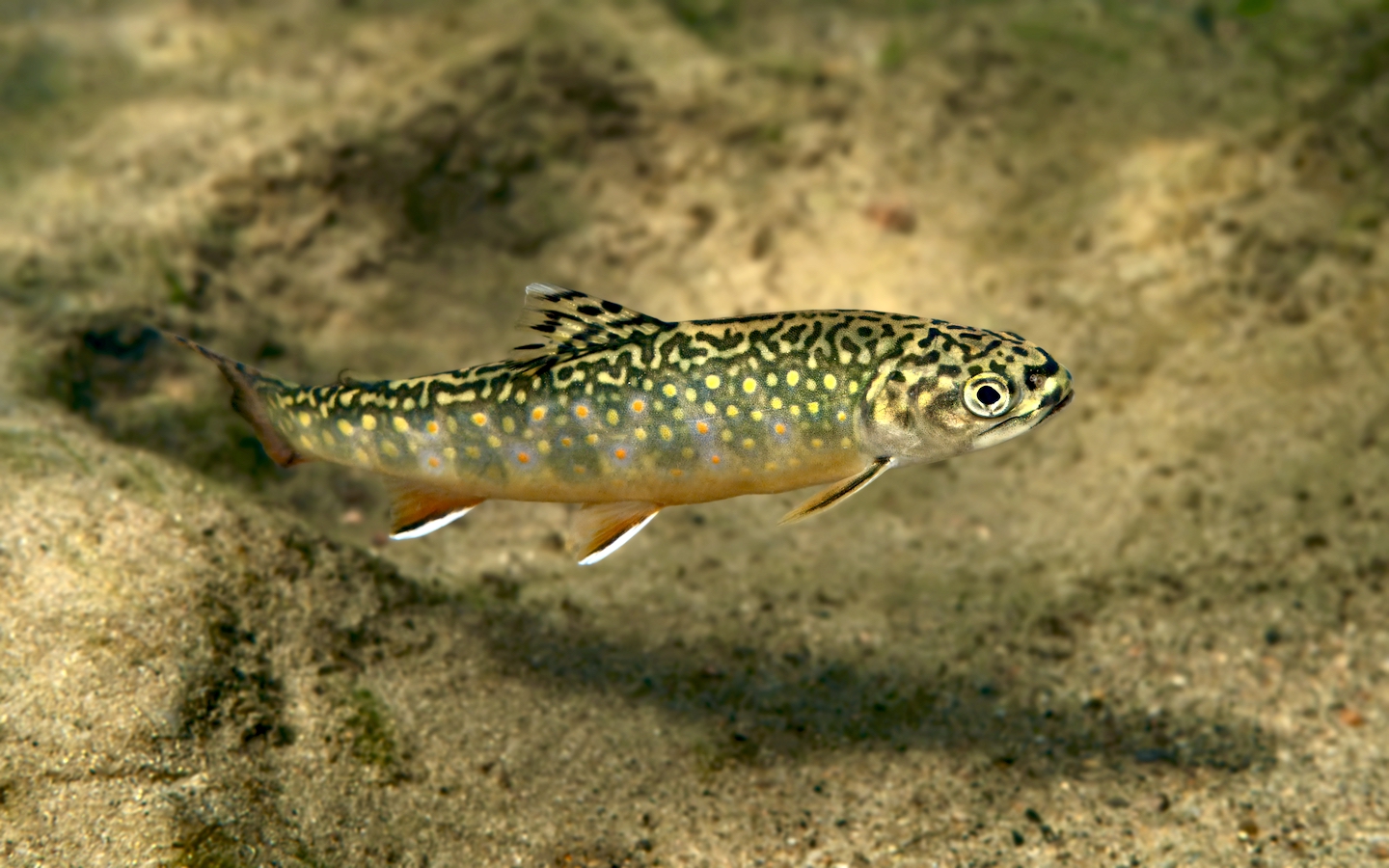
A landmark USGS study documents four decades of recovery in 42 Adirondack streams, while a new DEC management plan confronts invasive species, habitat loss, and a warming climate.
Brook trout (Salvelinus fontinalis) now occupy 33 of 42 western Adirondack study streams—more than half of which held no trout in the mid-1980s—according to a peer-reviewed U.S. Geological Survey study published in Freshwater Science in December 2025. The research, commissioned by the New York State Energy Research and Development Authority (NYSERDA), spans more than 40 years of water-chemistry and fish-population data—the most comprehensive biological accounting yet of the federal Acid Rain Program’s results in the region.
Nationwide sulfur dioxide emissions, the chief driver of acid rain, fell 94% between 1990 and 2021. In the study streams, fish species diversity rose 112%, total fish density jumped 236%, and overall fish biomass climbed 66%. Concentrations of inorganic aluminum—the compound that killed brook trout and other species outright—dropped to a fraction of their 1980s levels.
The Rebound Has a Ceiling
The recovery, however, is uneven. More than half of the 42 sites held no brook trout during initial surveys in 1984–89. By 2023, trout occupied 33 of them—a clear range expansion. But after an early population surge documented around 2000, trout density and biomass gains stalled. USGS fisheries scientist Scott George told the Adirondack Explorer that the bulk of the improvement came between the 1980s and early 2000s, and that in the past two decades density has plateaued even as brook trout have spread to more streams.
The likely explanation is competition. As water quality improved, other fish species rebounded faster and harder. Blacknose dace, creek chub, and other species filled the space that brook trout once dominated as stream communities diversified. The USGS team described the brook trout recovery as “somewhat ambiguous.”
A second limiting factor sits underground. Decades of acid deposition stripped calcium from Adirondack soils—a mineral that neutralizes acidity and underpins the aquatic food web. Retired USGS scientist and lead study author Barry Baldigo noted that those reserves are largely gone, and the slow weathering of bedrock cannot replenish them at anything close to the rate they were lost.
New Plan, New Threats
On January 5, the New York State Department of Environmental Conservation (DEC) released the final Adirondack Brook Trout Pond Management Plan, the first overhaul of pond-management strategy since 1979. The 15-year plan covers roughly 411 publicly accessible ponds across the Adirondack Park and confronts a grim baseline: up to 90% of historic brook trout pond habitat has been lost to logging damage, acid precipitation, and introductions of incompatible fish.
The plan’s most consequential regulatory shift is a proposed reversal of baitfish rules. Under current regulations, live baitfish are permitted by default in most Adirondack waters. The new framework would ban live baitfish by default, allowing their use only in 143 designated lakes with established warm-water fisheries. The regulation change still requires formal rulemaking and a public comment period, with DEC targeting 2026 for adoption.
Other provisions standardize the daily brook trout creel limit at five fish across all Adirondack Park ponds, prioritize self-sustaining wild populations over hatchery stocking, and expand heritage broodstock programs using genetically distinct native strains—Horn Lake, Little Tupper, and Windfall among them. DEC also announced $100 million from the state’s Environmental Bond Act and other capital funds for hatchery upgrades, including a new brook trout broodstock facility at the Adirondack Fish Hatchery.
The Oxythermal Squeeze
Even as acid rain recedes, a more diffuse threat is closing in. Research published in the Proceedings of the National Academy of Sciences by Cornell University scientists Stephen Jane and Peter McIntyre found that only about 5% of Adirondack lakes may retain suitable cold-water habitat under current warming and browning trends. In the 1980s, roughly 23% of the park’s lakes met that threshold.
The mechanism is a phenomenon called lake browning. Dissolved organic carbon from forest soils—leaching more freely now that acid rain no longer suppresses it—stains lake water tea-brown. That tinted water absorbs solar heat at the surface, accelerating warming in the upper layers while blocking sunlight from penetrating deeper. The result is a stratified water column: warm, oxygenated water on top and cold, oxygen-depleted water below. Brook trout, which need both cold temperatures and adequate dissolved oxygen, get caught in between—a narrowing band the researchers call the “oxythermal squeeze.”
Adirondack lakes are warming at rates more than double the global temperate-lake average, according to the Cornell data. In a majority of the park’s lakes, the habitable zone for brook trout during peak summer stress has shrunk to less than five feet of water column. The deepest lakes—those over 30 meters—resist the squeeze, but they represent less than 1% of Adirondack lakes.
What It Means for Anglers
The acid rain recovery is genuine and worth recognizing: four decades of emissions policy delivered measurable biological results in wild water. The Adirondack Council, in a statement accompanying the USGS release, called the Acid Rain Program one of the most effective environmental regulations since the 1970s.
For anglers planning a 2026 season in the Adirondacks, the practical picture is mixed. Brook trout occupy more streams than at any point since the early 1980s, and the DEC plan signals a stronger commitment to wild, self-sustaining populations over put-and-take stocking. Heritage-strain brook trout in backcountry ponds remain one of the rarest angling experiences in the Lower 48.
But the fishery is fragile. The baitfish rule change, if adopted, will reshape how some anglers approach Adirondack ponds. And the long-term trajectory—warmer water, browner lakes, compressed habitat—means that the cold-water refuges these fish depend on are shrinking. The policy lever that reversed acid rain worked. The levers available for warming water and shifting ecosystems are harder to pull.