
Yellowstone National Park Opens Fishing Season Early on Three Rivers
 February 2, 2026
  0 Comments
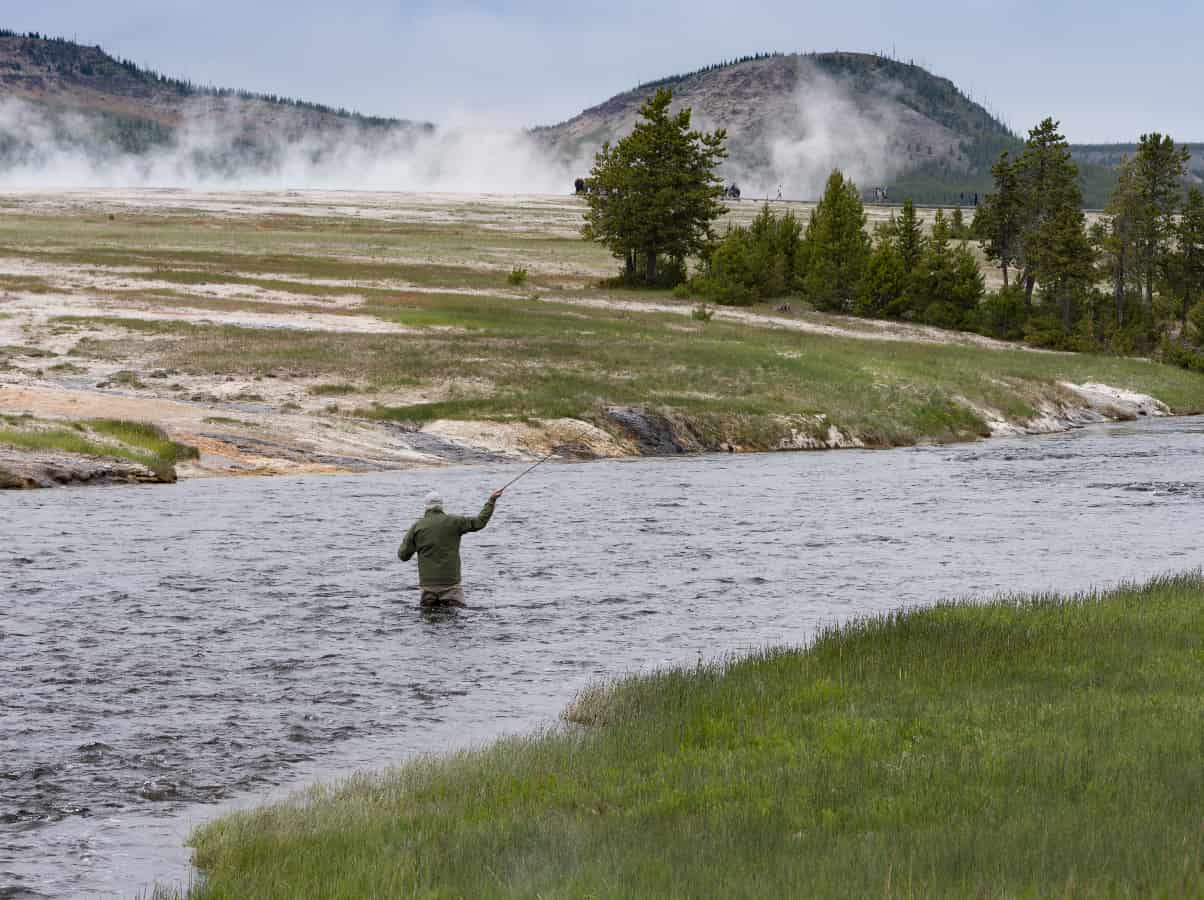
In a significant policy shift for the 2026 fishing season, Yellowstone National Park has announced that the Firehole, Gibbon, and Madison rivers will open to anglers on May 1—weeks ahead of the traditional Memorial Day weekend opener. The decision, announced January 27 by park officials, represents a strategic adaptation to changing climate conditions that have increasingly disrupted summer fishing on these thermally influenced waterways.
The standard fishing season in Yellowstone runs from the Saturday of Memorial Day weekend through October 31. Under the new policy, these three west-side rivers will open a full month earlier while maintaining the same October 31 closing date. Park officials emphasized that “no adverse impacts to the fisheries are anticipated” with this extension.
A Response to Warming Waters
The driving force behind this change is the increasing frequency of mid-summer fishing closures due to elevated water temperatures. The park’s announcement directly addressed this reality, noting that “temporary, partial, or full fishing closures typically occur later in the fishing season on these three waterways due to warm water temperatures and low river flows.”
The pattern has become distressingly predictable. In July 2024, the park closed all three rivers to fishing when water temperatures exceeded 68°F—a critical threshold above which trout experience severe physiological stress. The closures extended through much of August, with the Firehole River not fully reopening until mid-September. Similar restrictions followed in June 2025, when afternoon closures were implemented as temperatures again pushed past safe limits.
Local fishing outfitters have long recognized the problem. One West Yellowstone guide noted that the Firehole River has regularly exceeded 80°F by late June in recent years, prompting many operations to voluntarily stop guiding clients on these rivers by early July—well before official closures take effect.
Specific Waters Affected
The early opening applies to carefully defined sections of all three rivers. The Firehole River and all associated tributaries will open from the river’s headwaters downstream to its confluence with the Gibbon River at Madison Junction. The Gibbon River will open from the bridge on the Grand Loop Road at the Norris Campground entrance downstream to Madison Junction. The Madison River will open from the Montana-Wyoming state line upstream to where it forms at the confluence of the Gibbon and Firehole.
Notably, the Madison River from the state line downstream to the park’s West Entrance boundary near West Yellowstone, Montana, is already open to fishing year-round under existing regulations. All other park waters will continue to follow the traditional Memorial Day weekend opening.
What This Means for Anglers
For fly fishing enthusiasts, the policy creates a new early-season opportunity on some of the park’s most storied waters. The Firehole River, in particular, stands out as an attractive May destination. Its geothermal influences keep water temperatures more stable than typical freestone rivers, meaning it often remains clear and fishable even when spring snowmelt muddies other regional waters.
May anglers can expect productive hatches of Blue Winged Olives (Baetis) and midges—classic early-season fare that rewards technical dry fly fishing and soft hackle presentations. Weather conditions will likely remain cold, but those willing to brave the elements will find far fewer crowds than the traditional opening weekend typically brings.
The Gibbon and Madison rivers within the park may present more variable conditions in early May, as snowmelt can affect clarity depending on the specific week’s weather patterns. Anglers planning trips should monitor water conditions closely through the USGS Water Data for the Nation portal.
Adapting to a New Normal
The policy change represents an acknowledgment that spring has become the most reliable season for ethical catch-and-release fishing on Yellowstone’s thermally influenced plateau rivers. Rather than clinging to a Memorial Day tradition established under different climatic conditions, park managers are effectively trading unreliable August days for more predictable May fishing.
Climate projections suggest these pressures will only intensify. A recent analysis found that Yellowstone’s summer water deficit is expected to increase 25 to 35 percent by 2060 as warming temperatures reduce snowpack and increase evaporation. The 2026 fishing season change may be the first of many adaptations as the park’s resource managers work to balance angler access with the protection of native and wild trout populations.
For now, anglers should mark May 1, 2026, on their calendars—a new opening day for three of Yellowstone’s most beloved rivers, and perhaps the beginning of a new tradition shaped by the realities of a warming world.